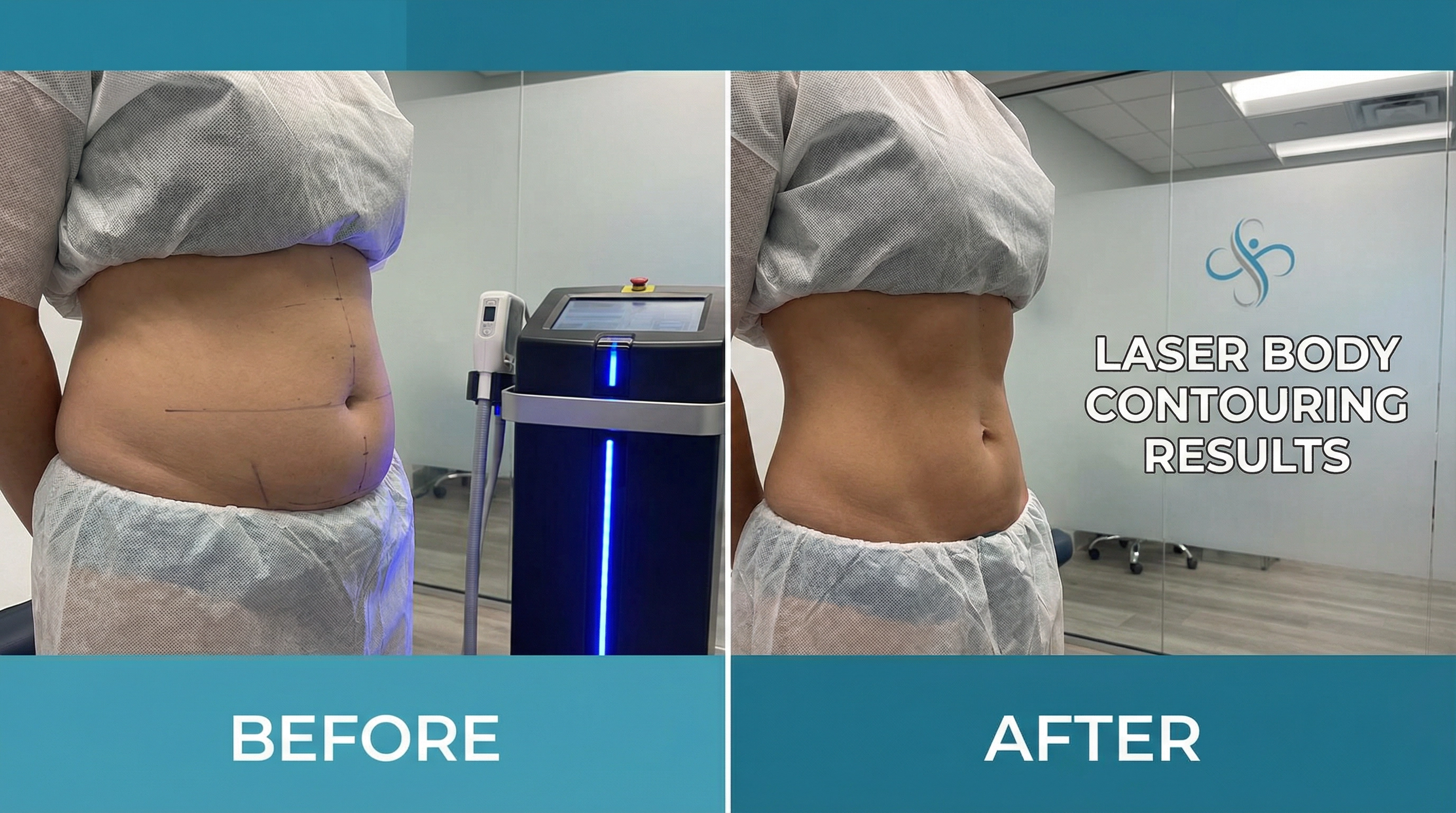
Energy-Based Muscle Stimulation and Neuromuscular Activation
Understand how electromagnetic energy triggers supramaximal muscle contractions and stimulates muscle growth without exercise.
Energy-Based Muscle Stimulation and Neuromuscular Activation
Energy-based muscle stimulation represents a paradigm shift in body contouring, offering the ability to trigger muscle contractions and growth through electromagnetic energy delivered non-invasively. This approach is particularly valuable for patients seeking muscle toning without extensive exercise or for those with limitations preventing traditional resistance training. Understanding how electromagnetic energy can trigger muscle growth requires exploring the intricate physiology of muscle contraction and adaptation.
At Loma Skin and Laser in Scottsdale, we recognize energy-based muscle stimulation as a sophisticated tool for body contouring and muscle enhancement. This evidence-based approach delivers meaningful results without the time commitment of traditional exercise.
The Neuromuscular System
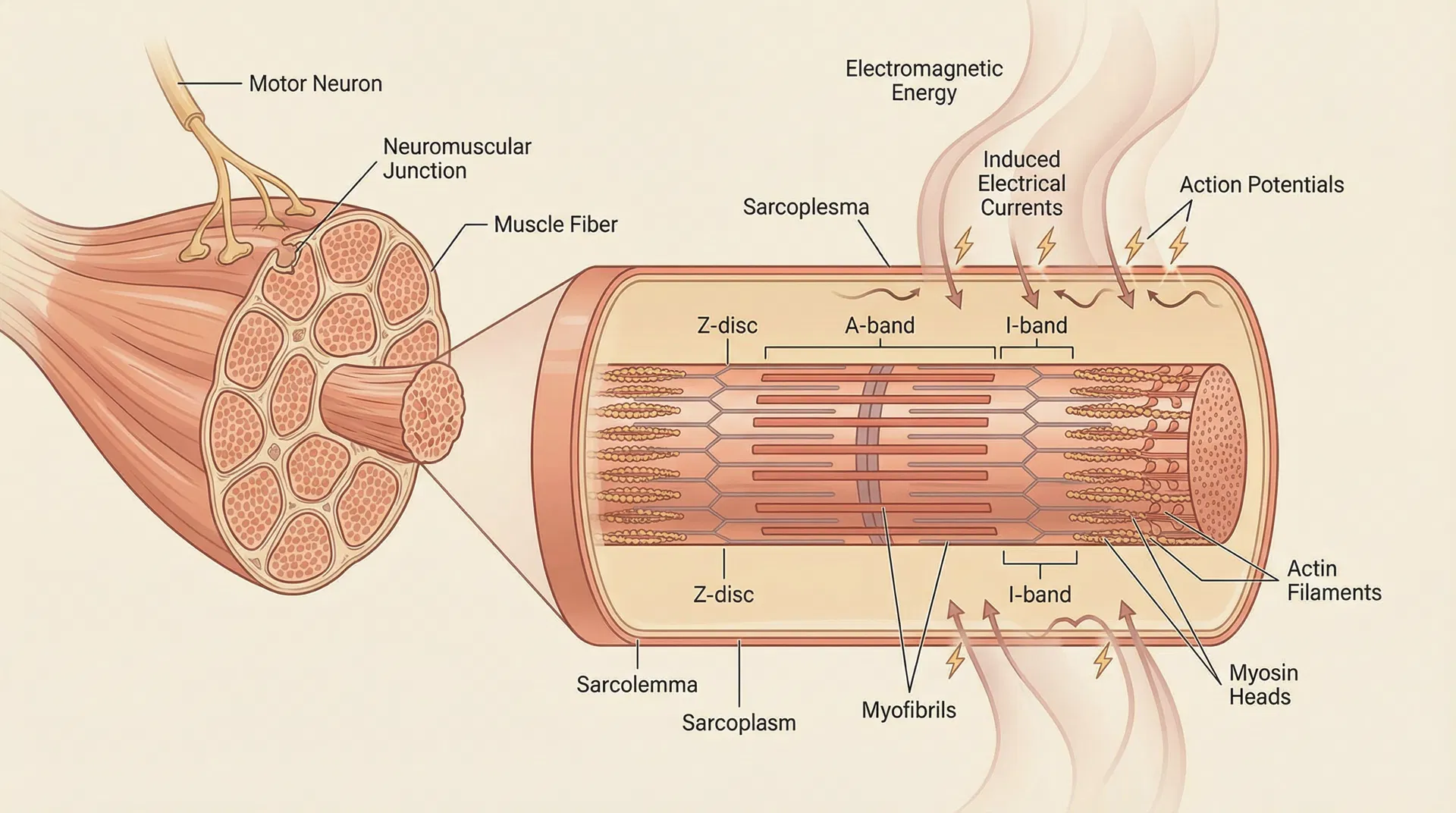
To understand energy-based muscle stimulation, we must first understand how muscles normally contract. Muscle contraction is initiated by signals from the nervous system-specifically, motor neurons that extend from the spinal cord to individual muscles.
Motor Units: A motor neuron and all the muscle fibers it innervates constitute a motor unit. When a motor neuron fires, it releases acetylcholine at the neuromuscular junction, triggering an action potential in the muscle fiber.
Muscle Contraction: The action potential propagates along the muscle fiber membrane and into the interior of the muscle fiber. This electrical signal triggers the release of calcium from the sarcoplasmic reticulum. Calcium activates the sliding filament mechanism-myosin heads bind to actin, forming cross-bridges that pull the actin filaments, causing the muscle fiber to shorten.
Energy-Based Muscle Stimulation Mechanisms
Energy-based muscle stimulation systems deliver electromagnetic energy directly to muscle tissue, bypassing the normal nervous system pathway. This direct stimulation triggers muscle contractions through mechanisms distinct from voluntary exercise.
Electromagnetic Field Interaction: High-intensity focused electromagnetic (HIFEM) systems generate rapidly changing magnetic fields that penetrate tissue and induce electrical currents. These induced currents depolarize the muscle cell membrane, triggering an action potential in the muscle fiber-essentially mimicking the electrical signal normally generated by motor neurons.
Supramaximal Contractions: A crucial distinction is that energy-based muscle stimulation triggers supramaximal contractions-contractions stronger than any voluntary contraction you could achieve. This intensity of contraction is crucial for muscle adaptation and growth.
Muscle Adaptation and Growth
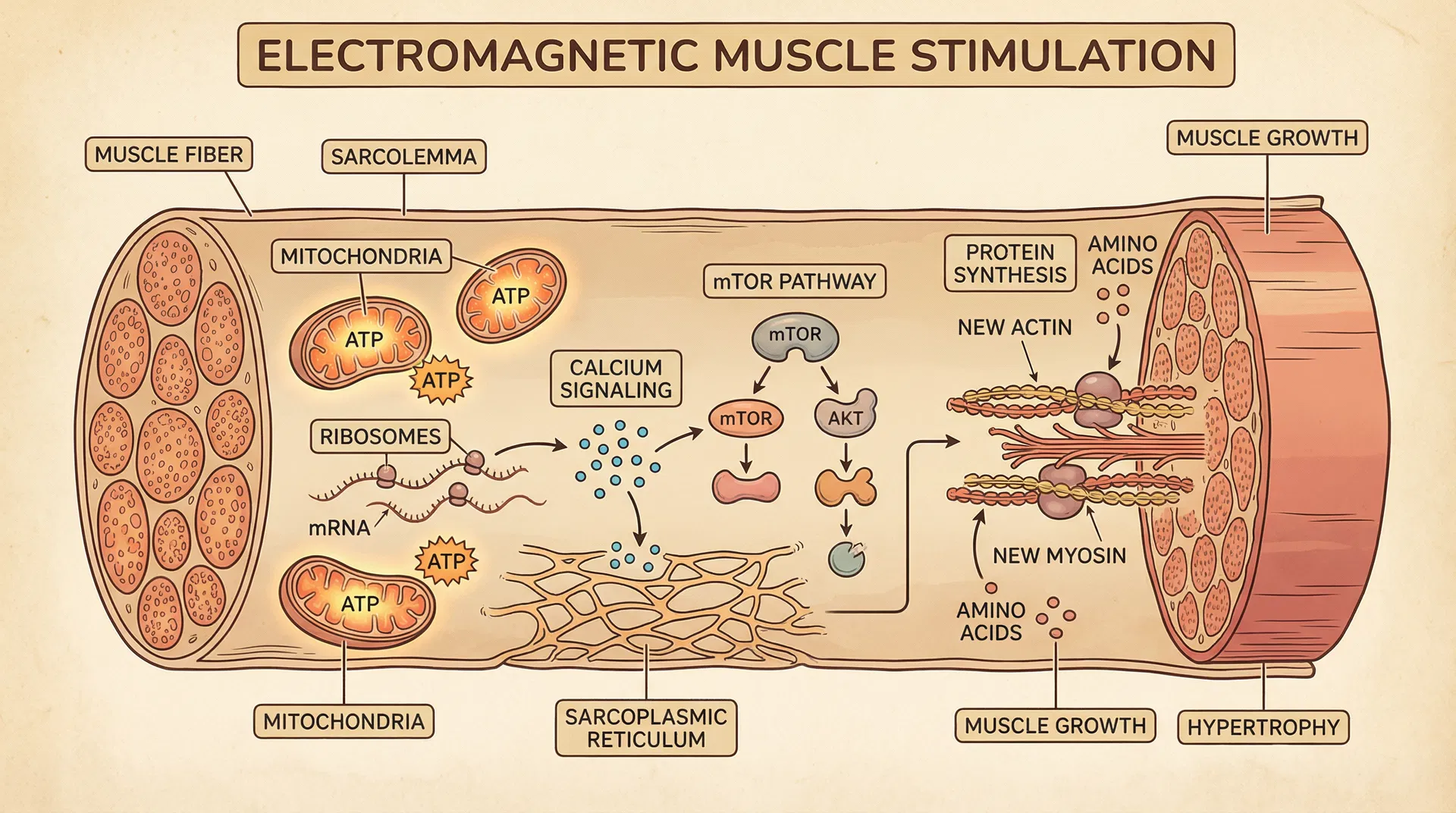
The supramaximal contractions triggered by energy-based muscle stimulation initiate a cascade of biological events that lead to muscle growth:
Mechanical Tension: The intense mechanical stress created by supramaximal contractions activates mechanotransduction pathways. The primary sensor is the mTOR pathway, which regulates protein synthesis. When muscle fibers experience intense mechanical tension, mTOR is activated, dramatically increasing muscle protein synthesis.
Metabolic Stress: The intense metabolic demands of supramaximal contractions deplete ATP and phosphocreatine. This metabolic stress activates anabolic signaling pathways and triggers the release of growth factors including IGF-1, FGF, and HGF.
Muscle Fiber Recruitment: Energy-based muscle stimulation recruits both Type I and Type II muscle fibers. Type II fibers have greater growth potential, making this recruitment pattern particularly effective for muscle growth.
Timeline of Muscle Adaptation
Muscle adaptation following energy-based muscle stimulation progresses over weeks and months:
Immediate Effects (0-24 Hours): Muscle fibers experience intense mechanical stress and metabolic depletion. Patients typically experience muscle soreness similar to post-exercise soreness.
Early Adaptation Phase (1-2 Weeks): Muscle protein synthesis is elevated. Muscle fibers begin accumulating new contractile proteins.
Growth Phase (2-8 Weeks): True muscle hypertrophy occurs. Muscle fibers increase in cross-sectional area. This is when patients notice the most dramatic improvements in muscle tone and definition.
Strengthening Phase (8-12 Weeks): The muscle continues to strengthen. Newly synthesized proteins become increasingly organized and integrated into the contractile apparatus.
Clinical Evidence and Expected Results
Energy-based muscle stimulation is supported by clinical evidence demonstrating:
- 15-25% increase in treated muscle thickness
- 15-25% improvement in muscle strength
- 15-25% reduction in fat in treated areas
- Improved muscle definition and contour
- Durable results with maintenance treatments
Results typically require 4-8 treatments spaced 2-3 days apart.
The Loma Skin and Laser Approach
Since 2011, Loma Skin and Laser has specialized in evidence-based body contouring. Our approach emphasizes customized treatment planning, realistic expectations, and progressive monitoring of results.
Ready to build muscle without hours at the gym? Book Consultation with our Scottsdale specialists to discuss how energy-based muscle stimulation can help you achieve your body contouring and muscle development goals.
Ready to explore this treatment?
Schedule Your Consultation